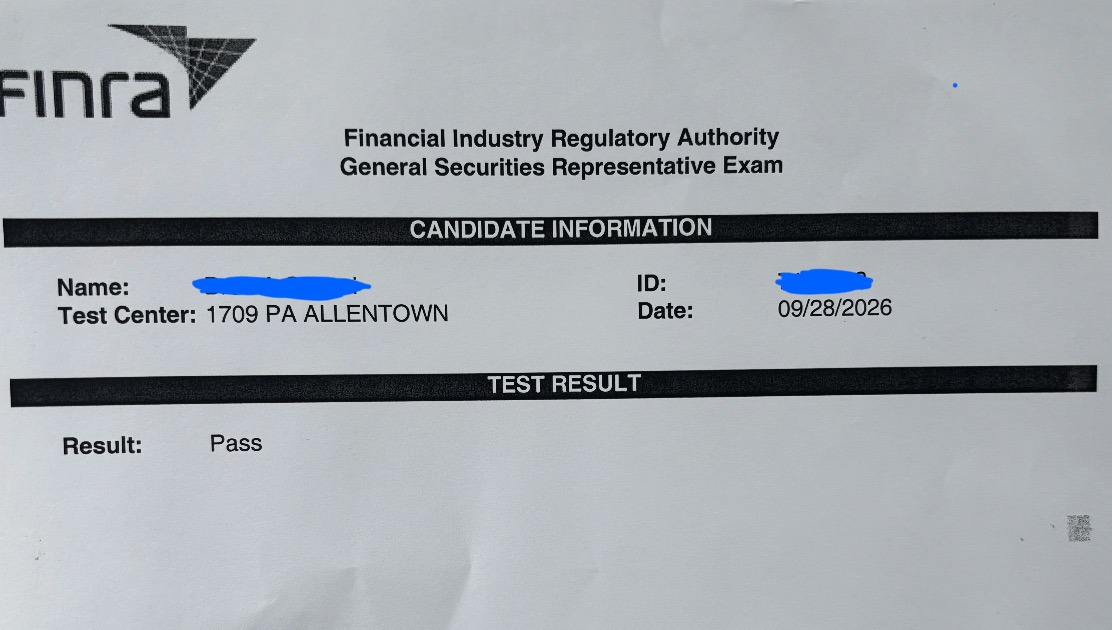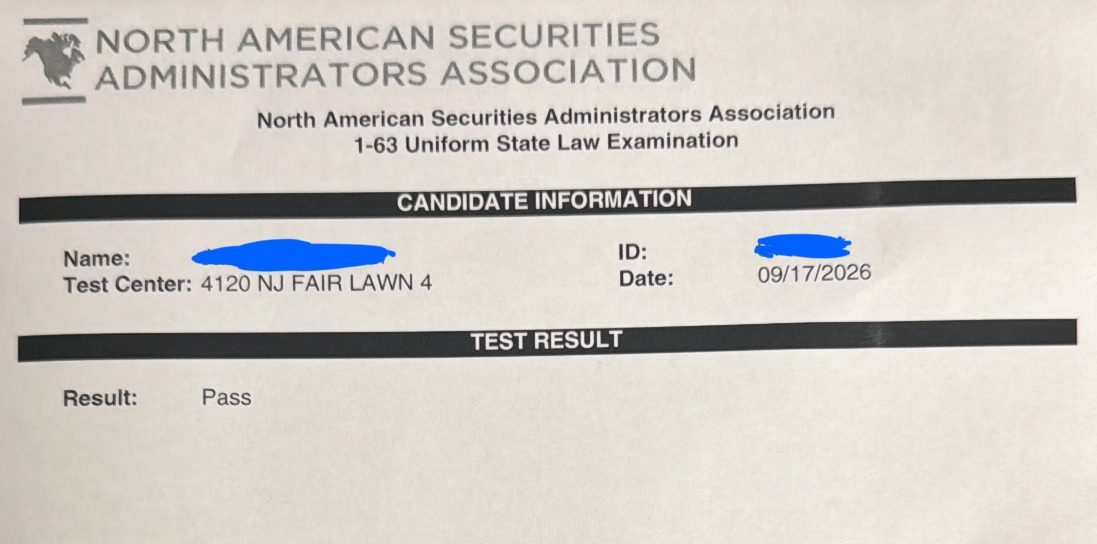
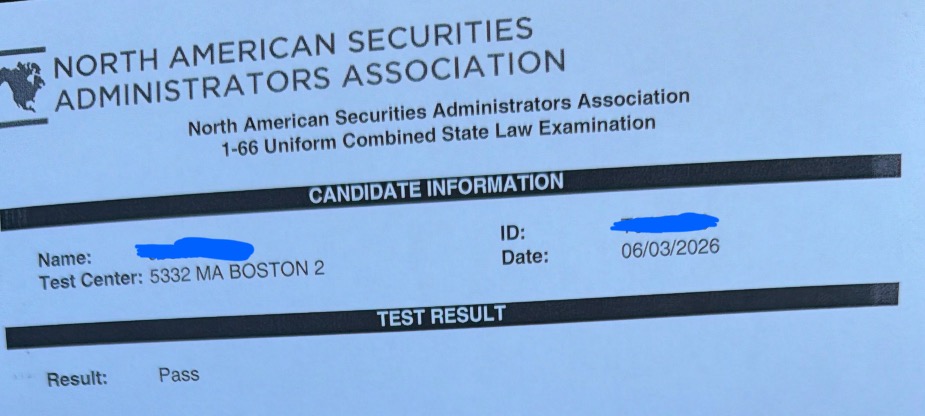
"Can I pass the Series 66 on my own, or do I need a tutor?" It's the question we hear most from candidates staring down the NASAA Uniform Combined State Law Examination — and it's worth answering honestly before you sink weeks into studying the wrong way. One of our students just passed it in June 2026 through private sessions, so here's the straight version: sometimes self-study is plenty, and sometimes a Series 66 tutor is the difference between a pass and a retake.
When self-study is enough for the Series 66
Plenty of people pass the Series 66 without a tutor. If you recently cleared the Series 7, the product knowledge is still fresh, and you have the discipline to sit down with a solid study guide and a question bank and grind the state-law and adviser material on your own — you probably don't need one-on-one help. The exam is very passable when your foundation is current and your study habits are good. Our Series 66 study guide is built for exactly that person: mechanism-first explanations and a question bank that mirrors the real exam, so a self-directed studier can find and close gaps without anyone looking over their shoulder.
When a Series 66 tutor is worth it
A Series 66 tutor earns its keep when something specific is in your way and more hours of the same studying won't move it. The patterns we see over and over:
You keep missing the same kind of question. If the adviser-versus-agent distinctions or the fiduciary scenarios trip you every single time, that's not an effort problem — it's a framing problem, and a tutor can rebuild the framework in a single session.
Your practice scores are stuck below the line. Mocks hovering in the high 60s usually mean one or two weak sections are dragging the whole thing down. A tutor pinpoints those fast, instead of you re-reading all of it hoping the average lifts.
You've already failed once, or you can't afford to. When a retake costs you a start date or a job offer, targeted help is cheap insurance.
What a private session actually changed
For this June 2026 student, the wall was the investment-adviser side — economic factors, portfolio reasoning, and the fiduciary standard all felt like a pile of disconnected rules. We didn't pile on more material. We tied that whole section back to one idea: what an adviser owes a client. Once the fiduciary standard became the thread running through it, the definitions and prohibited-practice questions stopped feeling like guesses. That's the thing a tutor does that a pre-recorded course can't — find the one knot and untie it, then watch everything downstream loosen.
Self-study or a tutor: how to decide
Be honest about where you actually are. If your practice scores are climbing and your foundation is fresh, run with a study guide and keep your money. If you're stuck, repeating the same mistakes, or staring at a retake, a private session will almost always get you there faster than another week alone. Either way, study from the real thing — start with the official Series 66 exam outline so you're not guessing at what's tested. And if you want us to look at exactly what's costing you points, book a private session and we'll build the prep around you.