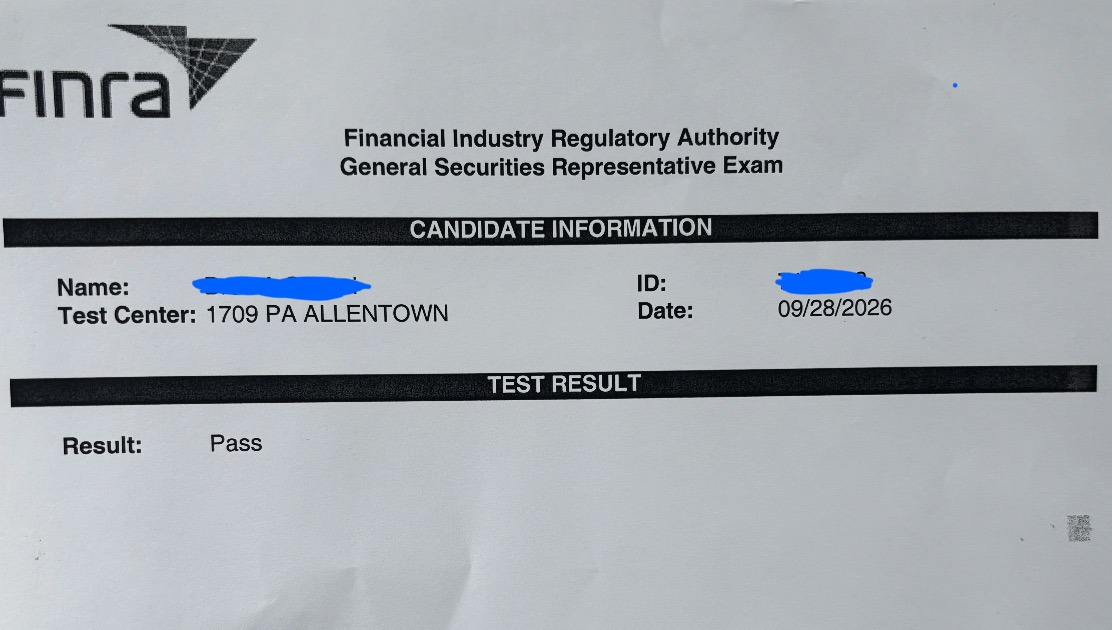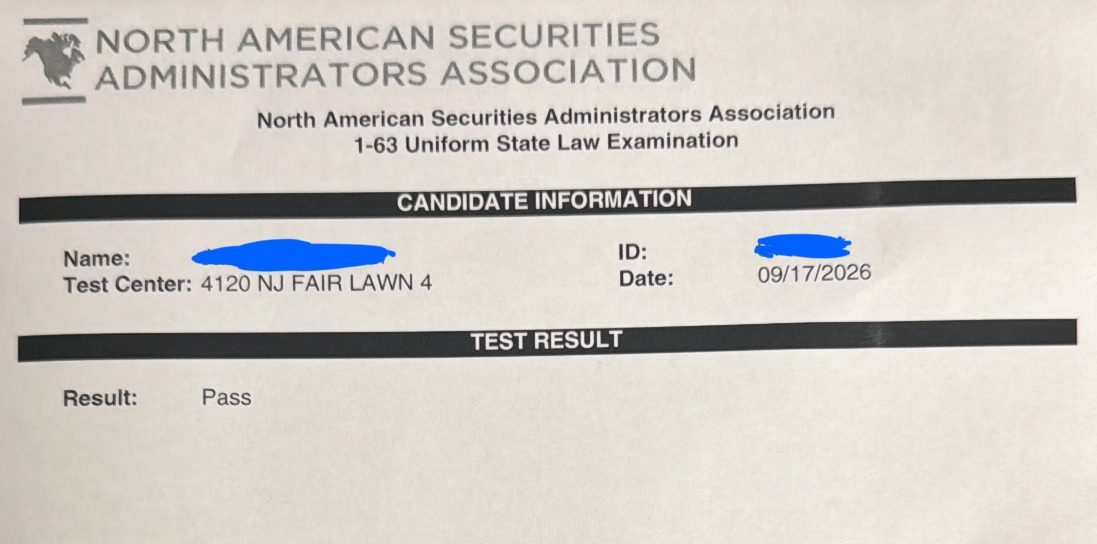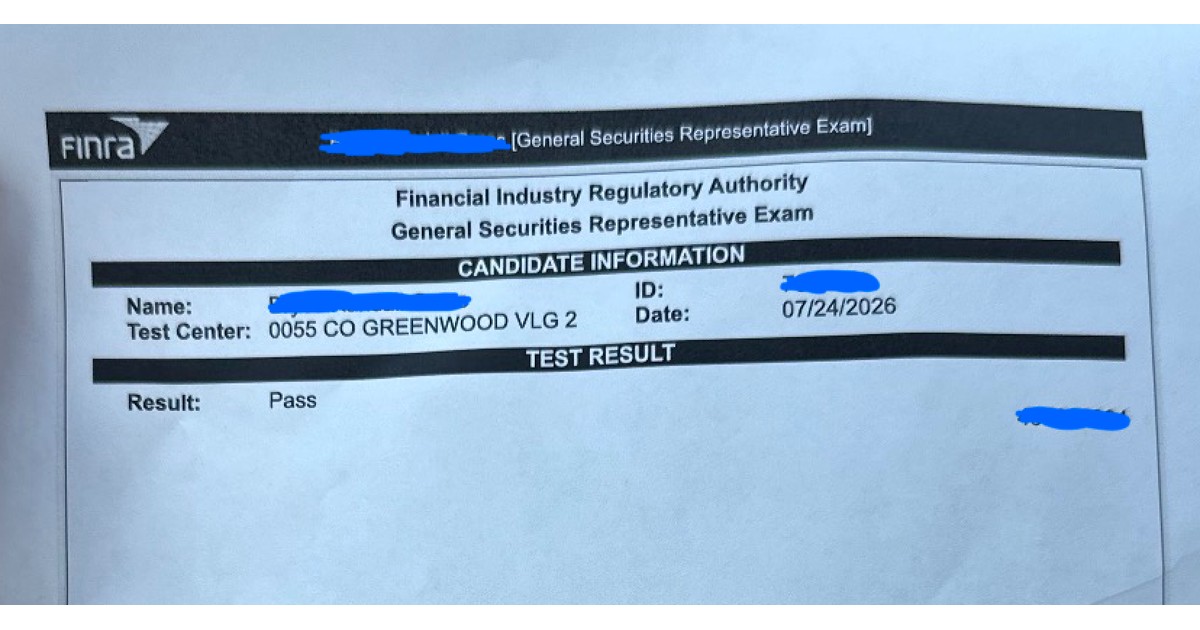
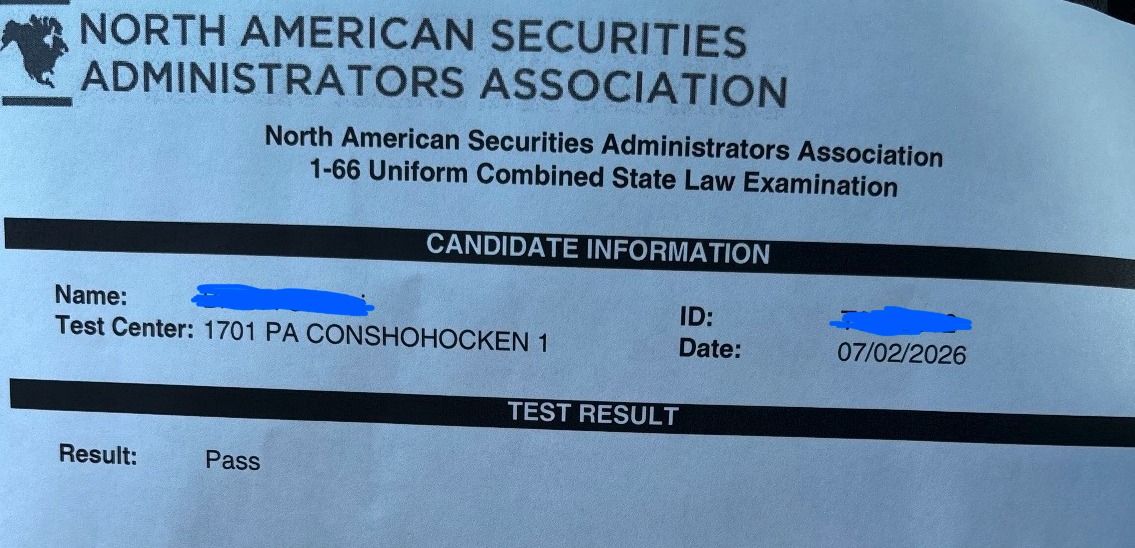
How hard is the Series 66 exam? Ask ten people who took it and you'll get ten different answers — but the pattern is consistent: candidates who breeze through the Series 7 routinely get humbled by the 66. On July 2, 2026, one of our private session students passed on exam day and headed straight into the Independence Day weekend fully licensed. Here's an honest look at what makes this exam difficult and what actually moved the needle.
How Hard Is the Series 66 Compared to Other Exams?
The Series 66 is widely considered one of the tougher licensing exams relative to its length. It's not hard because the material is exotic — it's hard because of how it tests. The questions are dense, deliberately lawyerly, and built around exceptions. Two answer choices are usually defensible, and the exam wants the most correct one. Candidates who rely on recognition instead of true understanding get filtered out fast.
The other trap: the 66 covers both NASAA state law and investment vehicle analysis. Most people are strong in one and soft in the other, then spend their study hours reviewing the half they already know because it feels productive.
Why Prepared Candidates Still Fail
Three failure modes come up again and again with the students we work with:
1. Registration logic memorized, not understood. Who registers where, which exclusions and exemptions apply, and what happens when an agent's broker-dealer isn't registered in a state — if you can't reason through a fresh scenario, memorized rules collapse under exam wording.
2. Fiduciary and suitability nuance. The exam loves to put an IAR and an agent in the same question and ask whose standard applies. Miss that distinction and a whole question cluster goes down with it.
3. Ignoring the quantitative questions. Alpha, beta, Sharpe ratio, time-weighted vs. dollar-weighted returns — these are gift points for anyone who practices them, and pure losses for anyone who skips them.
What Our July 2026 Student Did Differently
This student came to us through private 1-on-1 sessions. Instead of another full pass through a textbook, we diagnosed weak areas first, then spent session time exclusively on the topics costing points — state registration scenarios, IA vs. BD standards of conduct, and the analysis questions most candidates leave on the table. Targeted reps on weak areas beat broad review on strong ones, every time.
The result: a pass on July 2nd and a long weekend that actually felt like one.
So — Is the Series 66 Hard? Yes, But It's Beatable
The difficulty is real, but it's a specific kind of difficulty: precision under tricky wording. That's trainable. Start with our Series 66 study guide and question bank to build the foundation and drill exam-style questions, and if you're on a deadline or coming off a failed attempt, private sessions compress the timeline dramatically.
Official exam details are on the NASAA exam page. When you're ready to stop wondering how hard it is and start preparing to pass, we're ready.