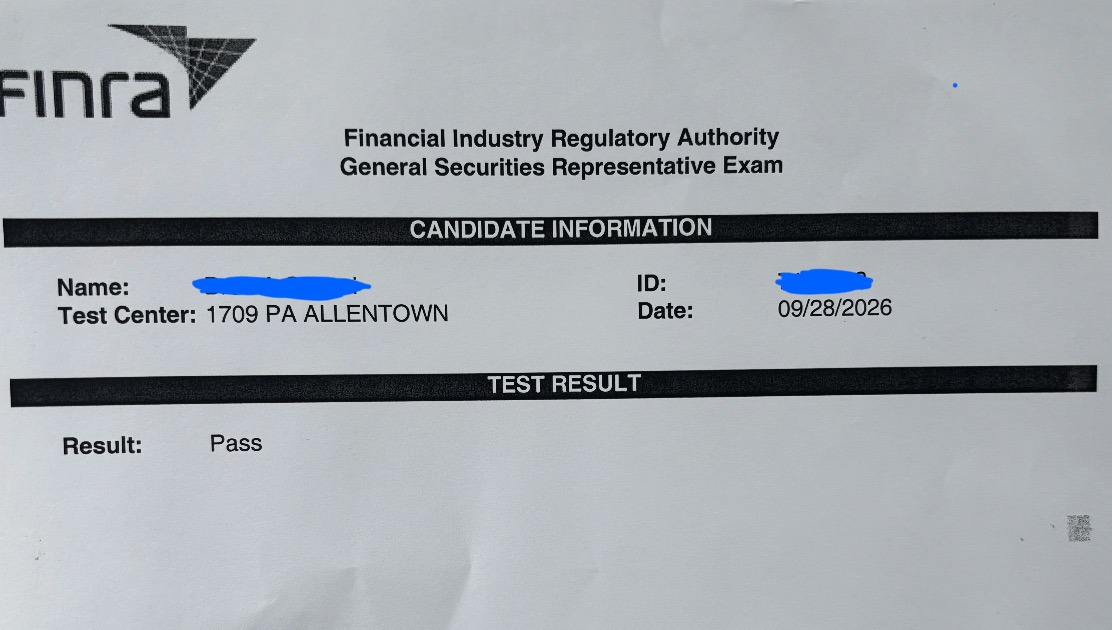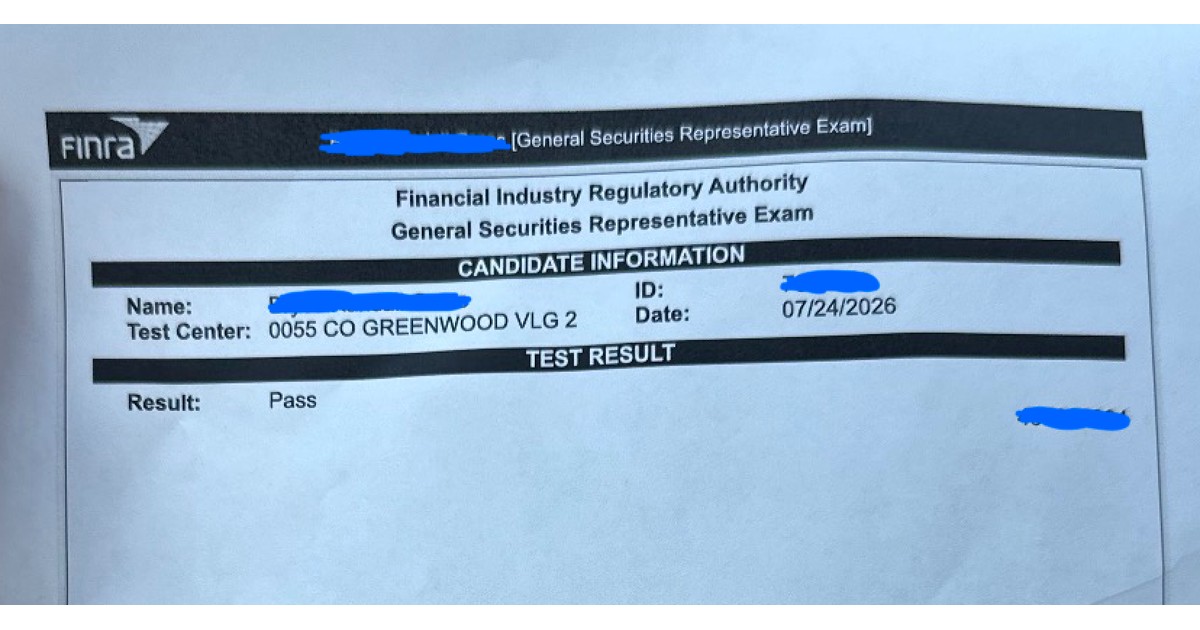
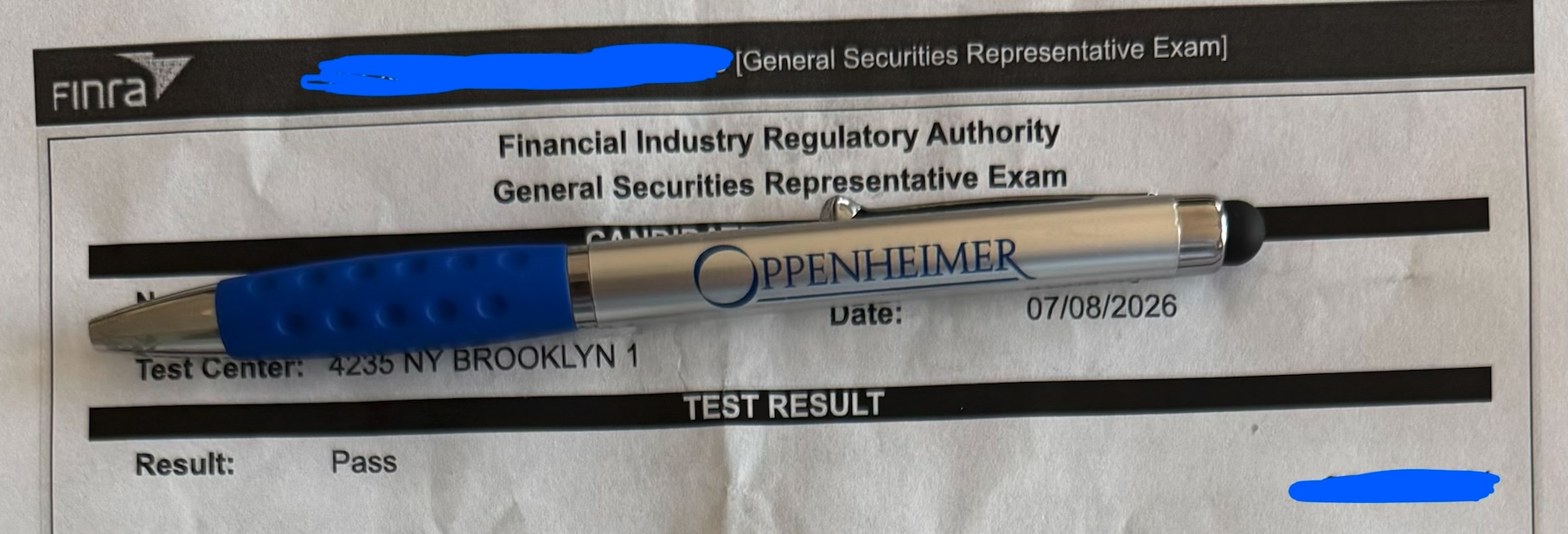
The Series 7 passing score is 72% — 90 of 125 scored questions correct — and that two-point gap above the SIE and Series 6 (both 70%) is where a lot of careers stall for 30 days at a time. In July 2026, one of our Series 7 students cleared it on the third attempt, after twice coming up just short. Here's what that 72% actually demands, and the single topic that decides who reaches it.
What the Series 7 Passing Score Really Means
On paper, 72% sounds forgiving. The exam is 125 scored questions (plus 5 unscored pretest questions you can't identify) in 3 hours and 45 minutes, so a passing score means you can miss 35 and still walk out licensed. But that margin is deceptive. FINRA does not publish official pass rates, and industry estimates from prep providers put the first-time pass rate at roughly 65–72%. Translation: about one in three people who sit for the exam leave without a license — and many of them come up only a few questions short.
The number that decides your day isn't the 72% — it's where your wrong answers cluster. Spread 35 misses evenly across the exam and you have plenty of cushion. Concentrate them in one place, and the exam finds you. That's exactly what a near-miss score report looks like: fine almost everywhere, bleeding points in one section.
The Topic That Decides the Series 7 Passing Score
Ask anyone who scores these exams for a living and the answer is the same: options. FINRA builds roughly 73% of the Series 7 around Function 3 — recommendations, analysis, and product knowledge — and options strategies are the most-failed piece of it. A single options question can force you to identify the strategy, decide whether it's bullish or bearish, and calculate maximum gain, maximum loss, and breakeven, all in under two minutes.
The candidates who fall short of the passing score almost always share a profile: they read the options chapter, nodded along, and never worked a spread or a straddle from a blank page under time pressure. Recognition is not recall — and the Series 7 tests recall. Repeat test-takers know this feeling better than anyone: the material looks familiar on every attempt, and the score barely moves.
Why "Almost" Gets More Expensive Every Time
Because the passing score is calculated only on the 125 scored questions, every point is real. Fall short and you face a mandatory 30-day wait plus another exam fee before you can sit again. Fall short a third time, and FINRA's waiting period jumps to 180 days — six months on the sidelines. A third attempt isn't just another try; it's the last one before the stakes change completely.
The three habits that quietly sink scores — attempt after attempt:
1. Studying breadth, ignoring depth. Reviewing equities and bonds one more time feels productive because it's comfortable. The points are hiding in options and municipals.
2. Memorizing formulas instead of drilling them. You don't rise to the level of your knowledge on exam day — you fall to the level of your practice.
3. Repeating the same prep and expecting a different score. Rereading the same book that produced the last near-miss is the most common retake mistake there is. If the misses clustered in options last time, the next 30 days belong to options.
How Our July 2026 Student Cleared It on the Third Attempt
Two attempts had already come up short — close enough to hurt, with the misses concentrated where they almost always are. So the third run looked nothing like the first two. We diagnosed the weak areas from the ground up, then spent session time almost entirely on options math and the suitability scenarios that decide Function 3, using exam-style questions with instant feedback instead of another textbook pass. Reps on the exact question types that show up on test day did the work. In July 2026, the third attempt was the last one: a pass, a license, and no 180-day wait looming over a fourth try.
Get on the Right Side of the 72%
The Series 7 passing score rewards one thing above all: executing options and suitability questions fast and correctly. Build that with the Exam Bootcamp Series 7 study guide and question bank, drill the strategies until max gain, max loss, and breakeven are automatic, and — especially if you're coming off a failed attempt — change the prep, not just the test date, with private 1-on-1 sessions or a live bootcamp. Official exam details are on the FINRA Series 7 page. Whether it's your first attempt or your third, the goal is the same: be on the right side of that 72% — and we can get you there.
Scores stuck in the 60s? Private Series 7 tutoring can fix the topics deciding your 72%.