
Function 1 — 7% (9 questions)
Seeks Business for the Broker-Dealer
- Communications with the public (basic standards + approvals)
- Product/service overviews and required disclosures
- Prospecting basics and compliant outreach
Prep for the Series 7 – General Securities Representative Exam with clear lessons + exam-style practice. Self-paced online prep built for passing—simple explanations, targeted quizzes, and full-length practice exams so you always know what to study next.
Instant digital access • Mobile + desktop friendly • Progress tracking • Built for exam-style testing
The Series 7 is FINRA’s General Securities Representative qualification exam. Combined with a passing SIE result and firm sponsorship, it registers you to solicit, purchase, and sell essentially the full range of securities products for customers: stocks, bonds, options, municipal securities, investment company products, variable contracts, and direct participation programs. It’s the broadest of the representative licenses, which is why broker-dealers make it the default for new brokers and advisors.
Passing the Series 7 alone still doesn’t put you in business. You must be sponsored and registered through a member firm, and most states additionally require the Series 63 or Series 66 before you can transact for residents. The Series 7 also doesn’t cover futures — that’s the Series 3 — and it doesn’t make you a supervisor; principal roles require exams like the Series 24.
FINRA organizes the exam around the rep’s job. Function 3 — information, recommendations, and records — is 73% of the exam. That’s where the products, options, and suitability live, and where your study time should go.
Function 1 — 7% (9 questions)
Function 2 — 9% (11 questions)
Function 3 — 73% (91 questions)
Function 4 — 11% (14 questions)
The Series 7 has a reputation as the hardest representative-level exam, and the reputation is earned — not because any single topic is impossible, but because of volume and stamina. You’re answering 130 questions over nearly four hours, and the exam expects you to apply concepts, not just recognize them: pick the suitable recommendation, work the options math, compare yields, and spot the compliance problem inside a customer scenario. FINRA doesn’t publish pass rates, so ignore anyone quoting one as fact.
The consistent failure pattern we see is candidates who know definitions but haven’t drilled application — especially options strategies and suitability chains. That’s why our system pushes you into exam-style questions from day one instead of saving them for the end. If you’ve already hit that wall, private Series 7 tutoring works those question types with you directly.
The SIE is the open-to-everyone basics exam; the Series 7 is the sponsored, role-specific top-off. The SIE asks what a call option is. The Series 7 asks which option strategy fits a customer, what it costs, where it breaks even, and what the tax result is.
The Series 6 registers you for a subset of the Series 7’s authority: investment company products and variable contracts only. If your production will ever include individual equities, bonds, or options, firms register you with the 7 — it fully covers the 6’s territory.
State law registration is separate. The Series 63 covers state agent law and is the usual pairing for pure brokerage roles. The Series 66 combines the 63 and 65 — agent plus investment adviser representative — and requires the Series 7, making 7 + 66 the standard path at firms whose reps also give advisory services.
Original questions written by our instructors in the style of the exam — not taken from our question bank or any other provider.
1. An investor buys 100 shares of XYZ at $40 per share and writes 1 XYZ Jan 45 call at a premium of 2. What is the investor’s maximum potential gain?
Answer: C. This is a covered call. Maximum gain occurs if the stock is called away at 45: a $5 per-share gain on the stock ($500) plus the $200 premium received, for $700 total. Writing the call caps the upside — the unlimited gain belongs to a long stock position with no short call.
2. A customer buys $12,000 of marginable common stock in a new margin account. Under Regulation T, the required initial deposit is:
Answer: B. Regulation T requires 50% of the purchase price for long marginable equity purchases: 50% × $12,000 = $6,000. The $2,000 figure is the industry minimum equity for a margin account, which is less than the Reg T requirement here and therefore not controlling.
3. A customer in the 32% federal tax bracket is comparing a 4% general obligation municipal bond with a corporate bond of similar quality and maturity. The corporate bond must yield approximately what rate to be equivalent after tax?
Answer: B. Tax-equivalent yield = municipal yield ÷ (1 − tax bracket) = 4% ÷ 0.68 ≈ 5.88%. Municipal interest is federally tax-exempt, so a taxable corporate bond must yield more to leave the investor equally well off after tax.
4. A bond with a 6% coupon is trading at 120. Its current yield is:
Answer: B. Current yield = annual interest ÷ market price = $60 ÷ $1,200 = 5%. Because the bond trades at a premium, the current yield is below the coupon rate — and its yield to maturity would be lower still.
Chapters mapped to the FINRA outline, quizzes after every chapter, targeted drills for math, options, and suitability, and full 125-question finals that simulate the real sitting.
Screenshots shared by Exam Bootcamp students.
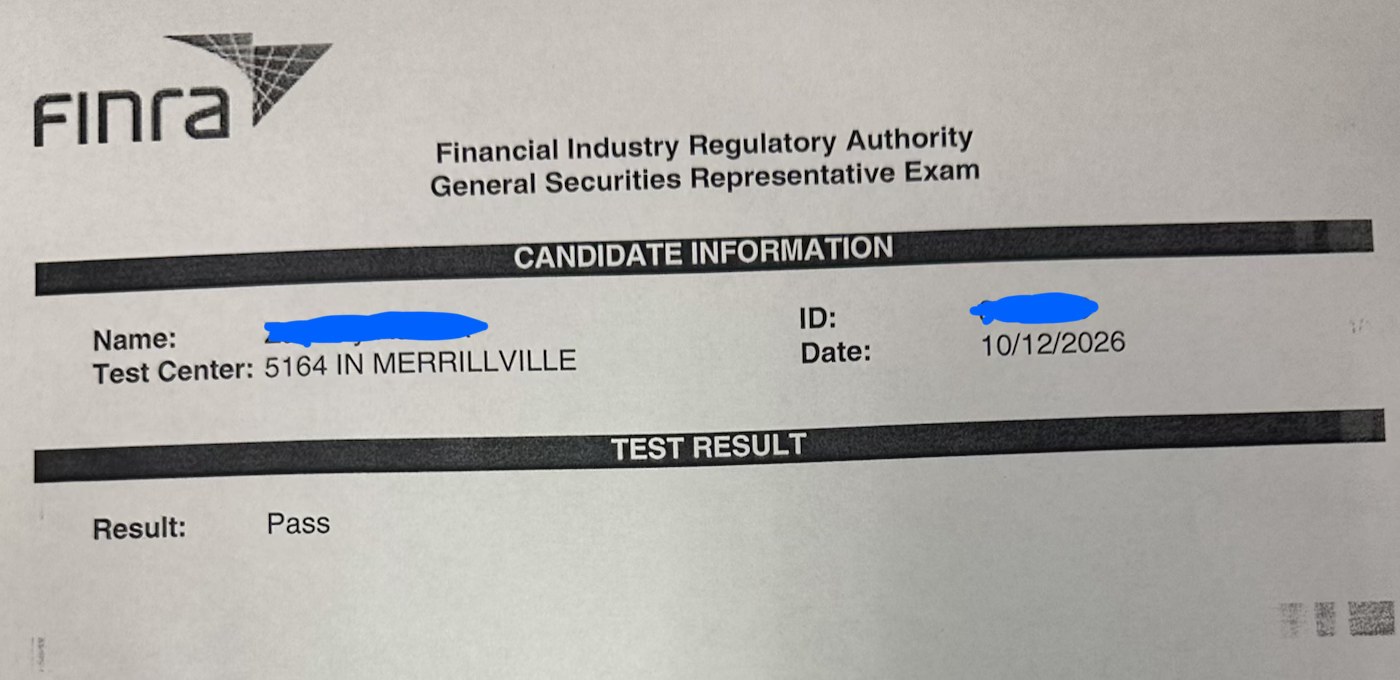
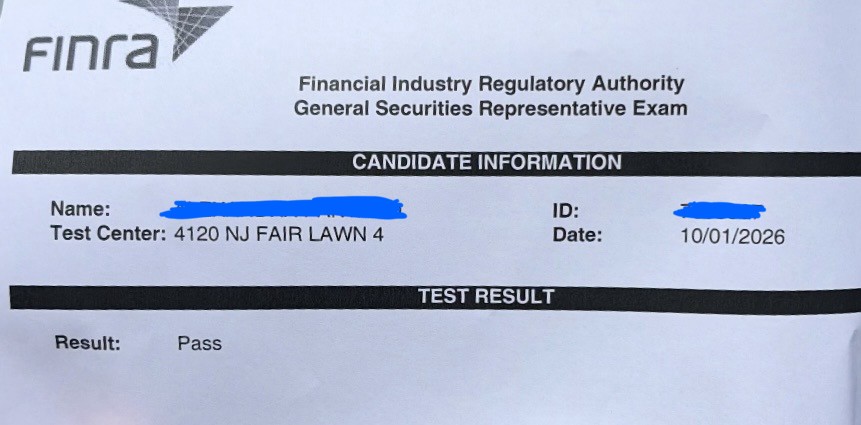
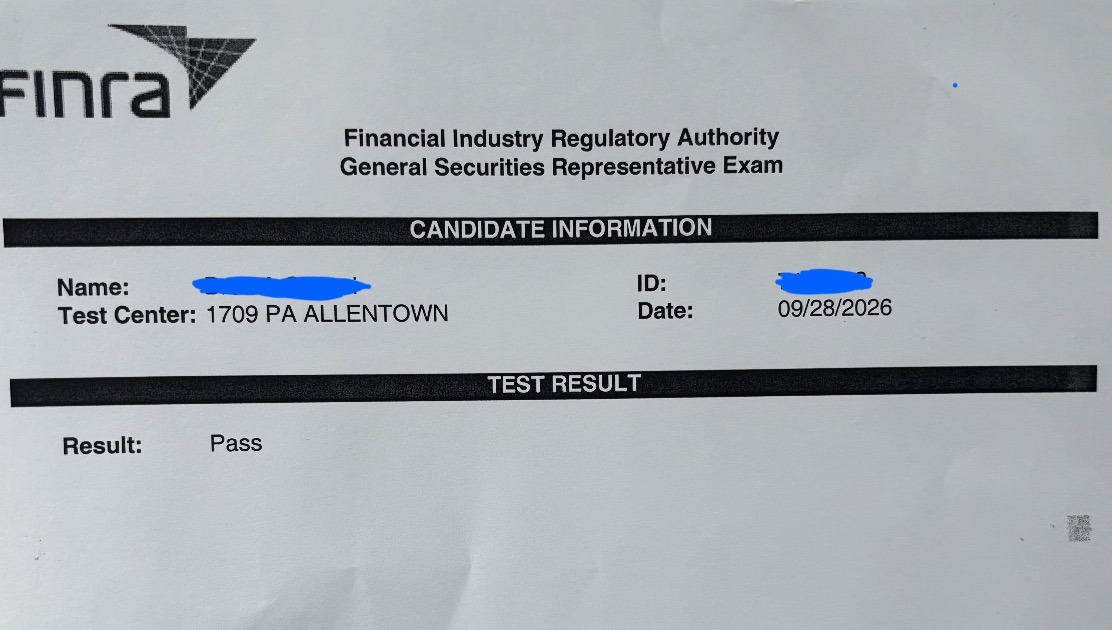
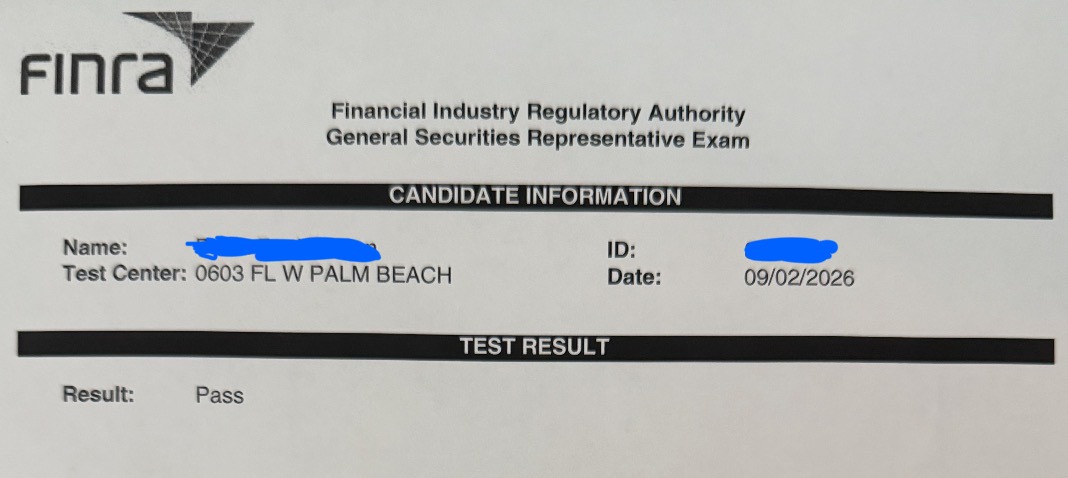
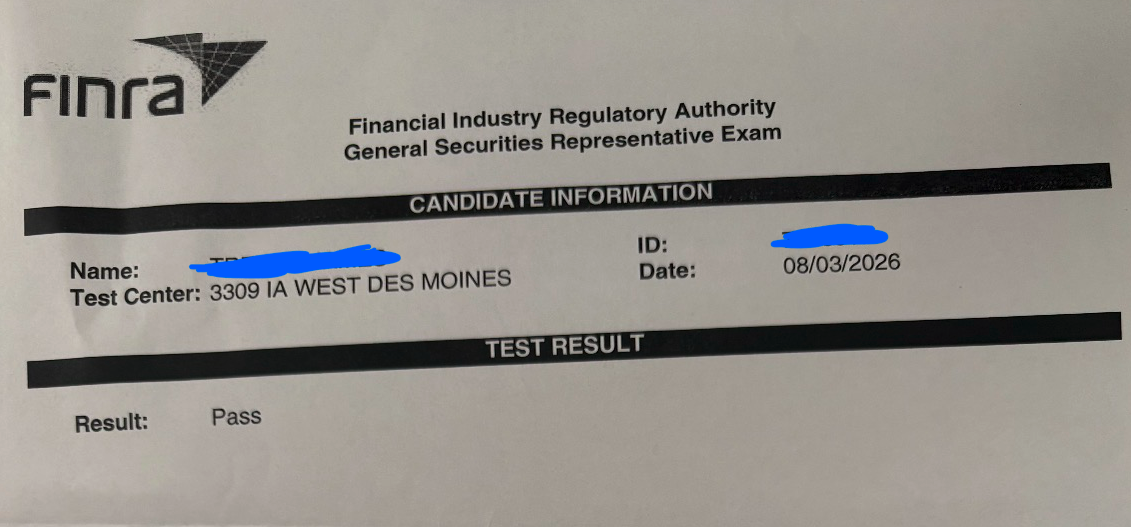
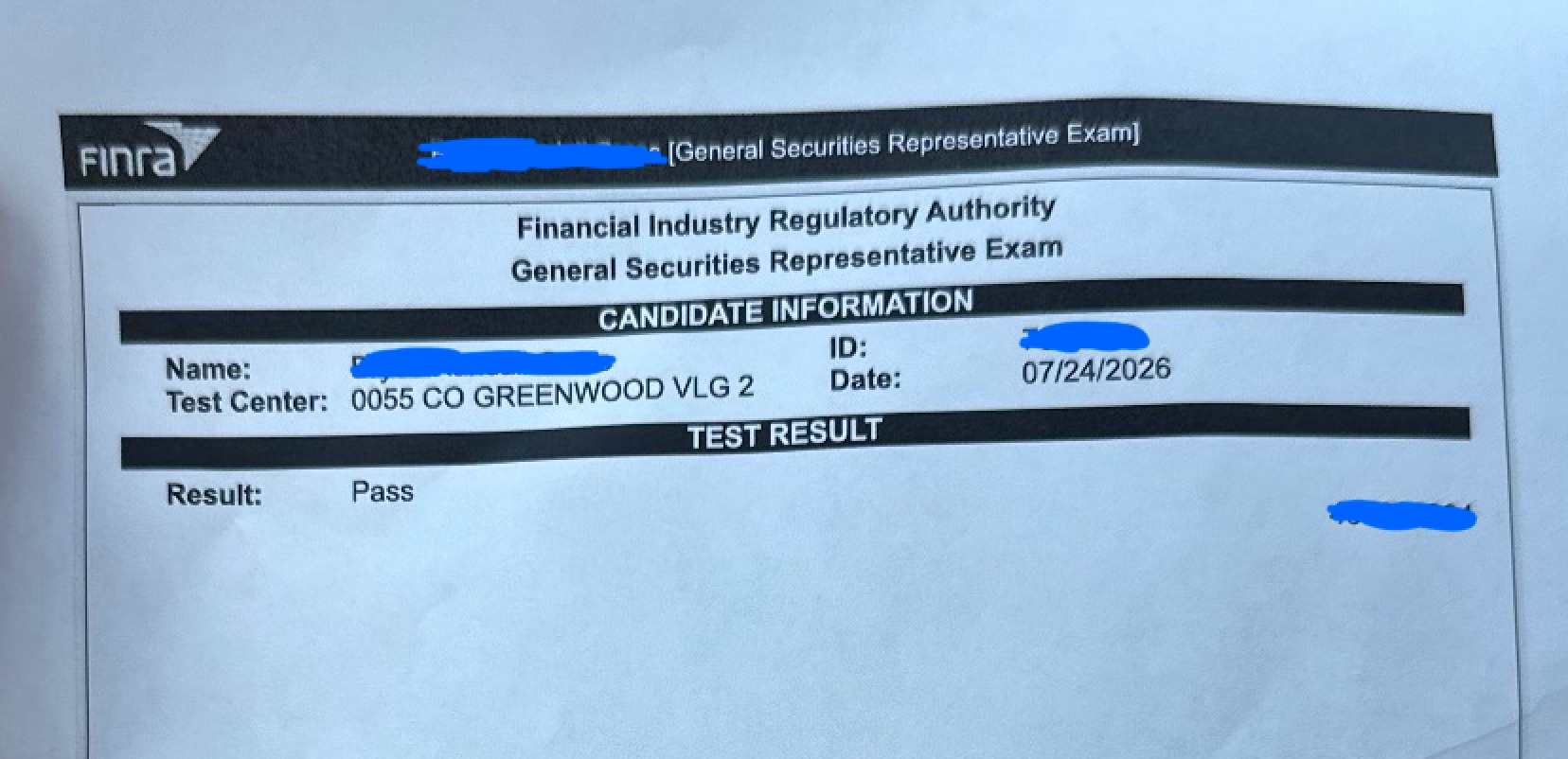
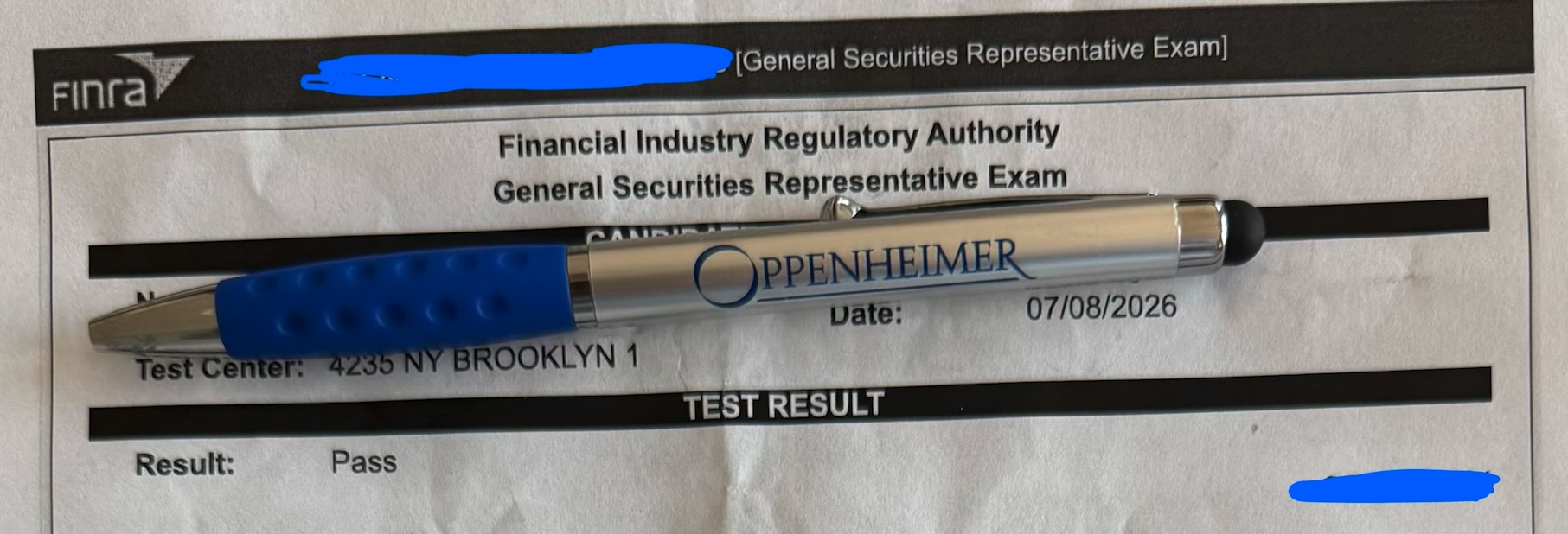
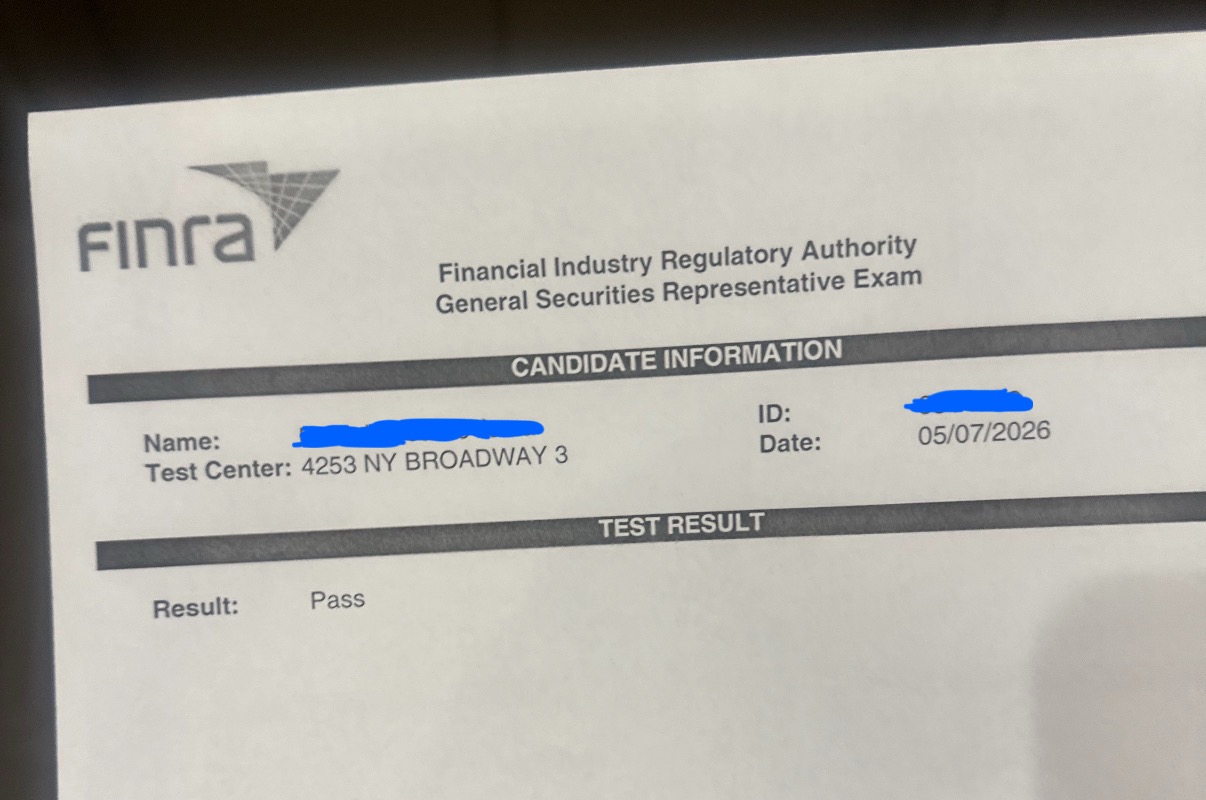
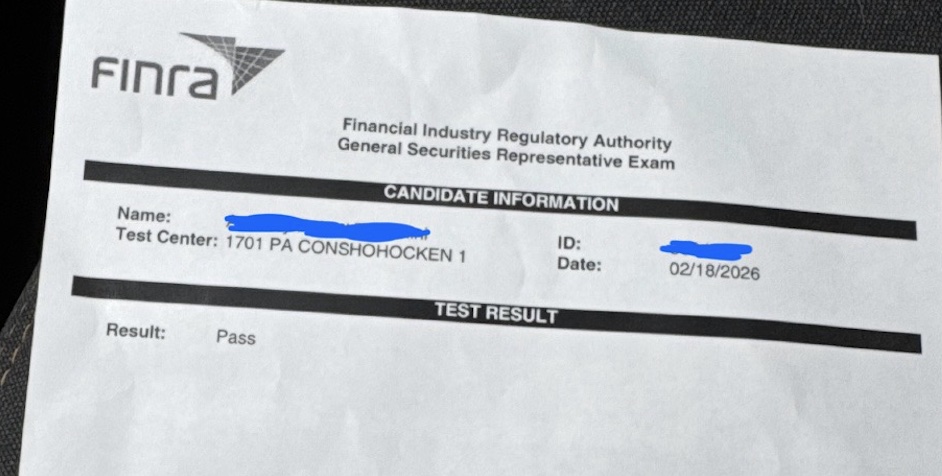
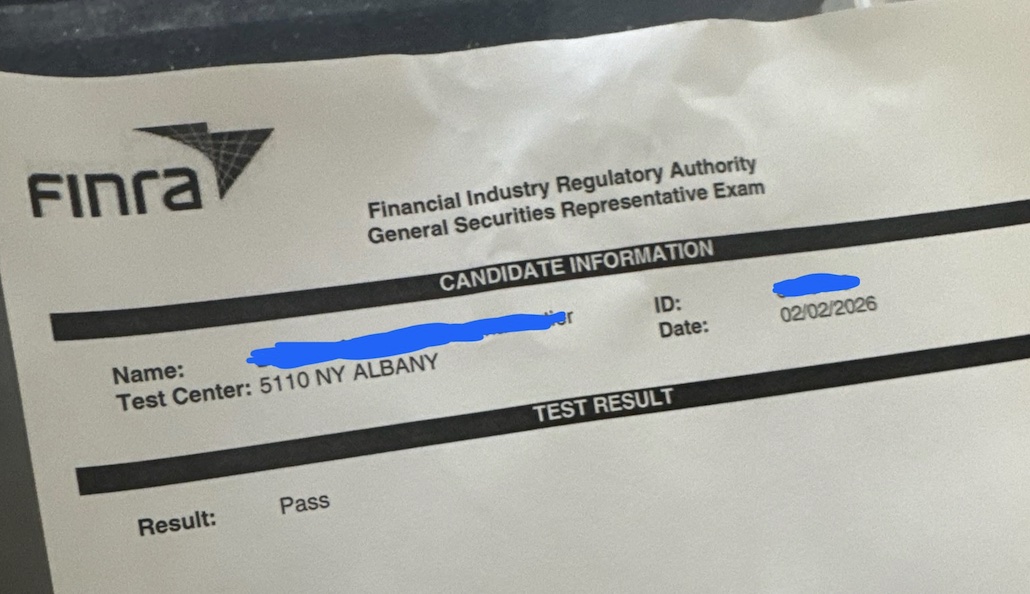
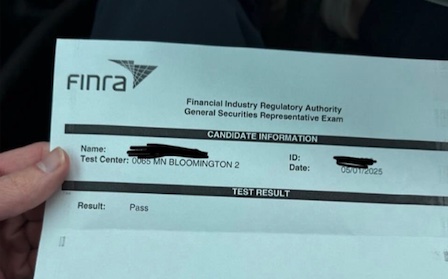
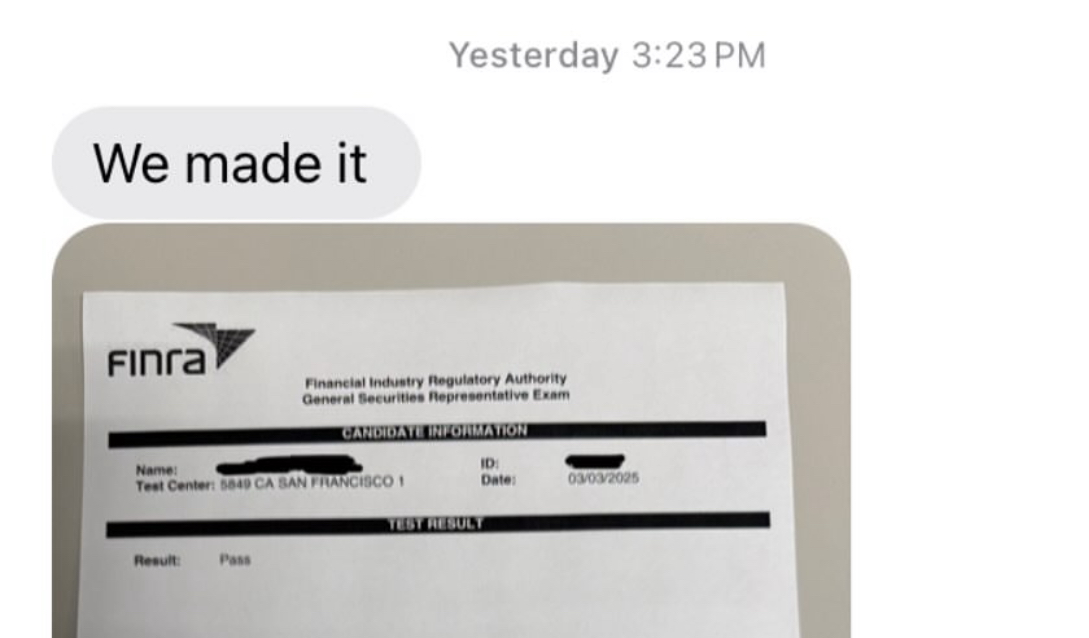
Series 7 prep was personalized around my schedule. Each session targeted what I needed most, and my confidence improved fast.
— Elizabeth, Series 7
Passed the Series 7 with a methodical approach that identified my weak areas and improved both understanding and test-taking strategy.
— Raymond, Series 7
Passed multiple exams (Series 7, 63, 66, and 79) with a tailored approach, real-world explanations, and consistent accountability.
— Aaron, Series 7
Options finally made sense. Simple explanations, memory tricks, and practice that mirrored the Series 7 exam boosted my confidence.
— Kwavi, Series 7
GET INSTANT ACCESS
$89.99
Sources: FINRA — Series 7 Exam · FINRA — Series 7 Content Outline · FINRA Rule 1210 (registration requirements)
Content reviewed against the official FINRA outline in July 2026.
Most people sitting the Series 7 take at least one of these, either before it or straight after. Each guide is a separate product with its own question bank.
Want it taught rather than read? See Series 7 tutoring, or browse all securities exam study guides and live exam bootcamps.
Get instant access to the Series 7 Study Guide and start practicing with exam-style questions now.
Get Instant Access — $89.99