
Private SIE Tutoring Built Around Your Weak Areas
SIE tutoring for candidates who have read the material and still miss the questions. We start from your practice scores and the questions you keep getting wrong, then work on the specific gaps — products, market structure, regulation, or the prohibited-activity rules that catch first-time candidates out.
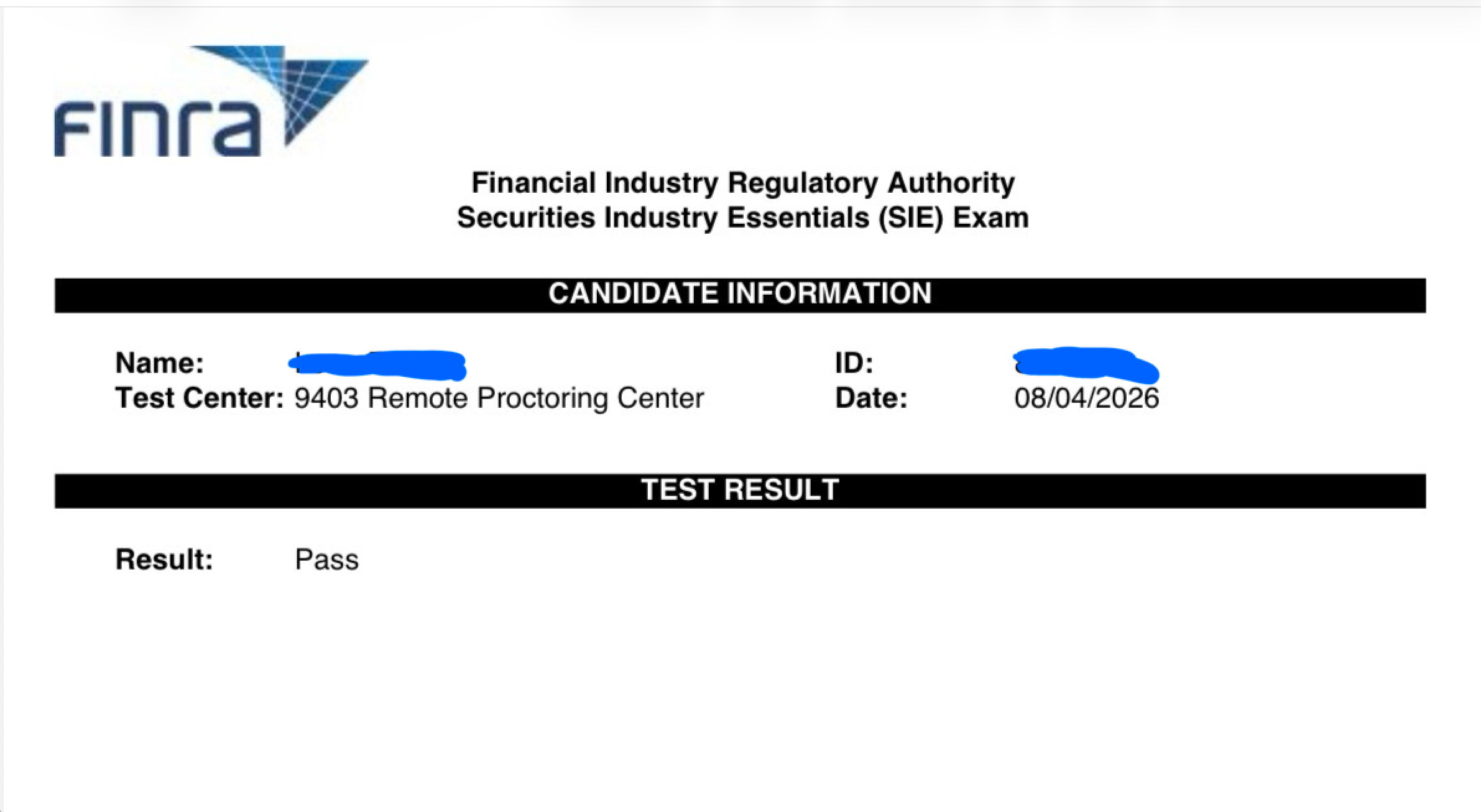
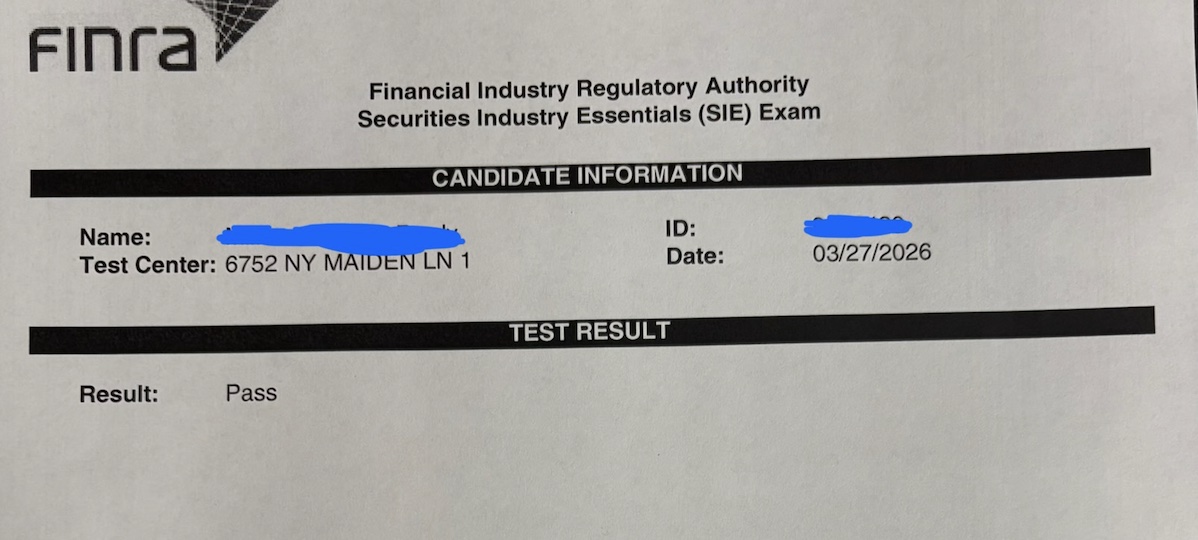
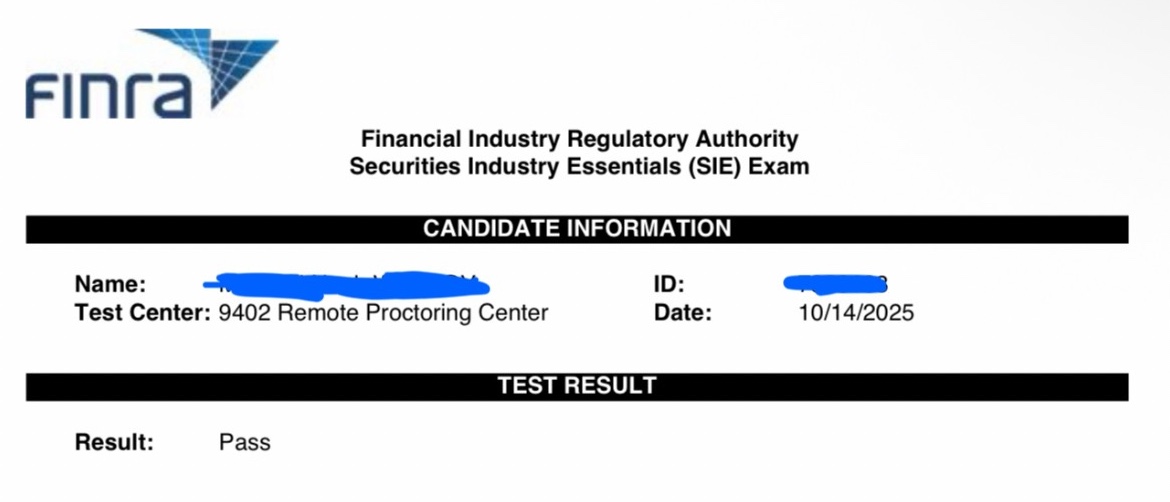
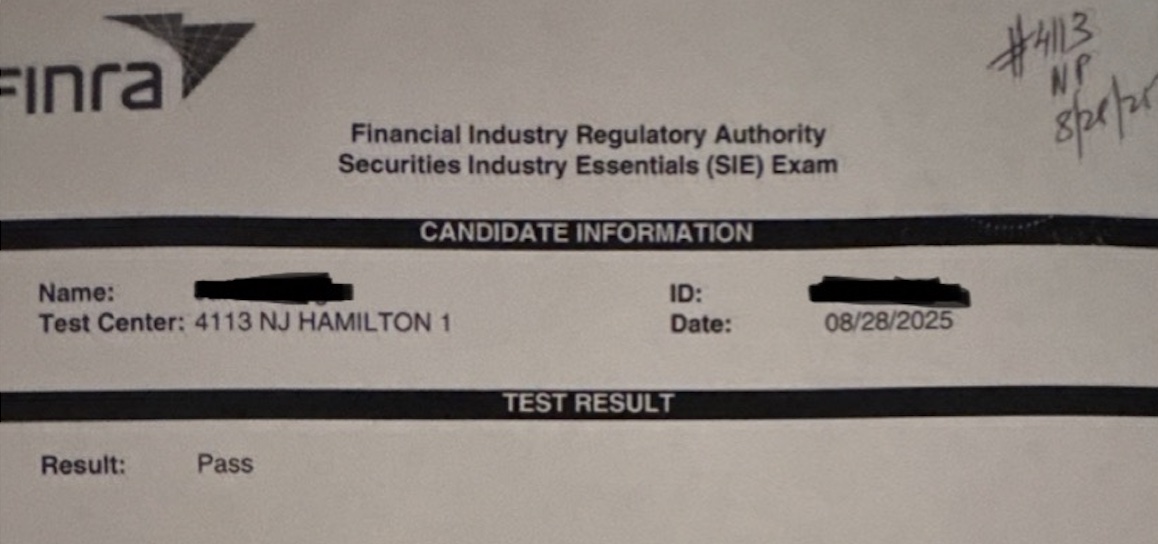
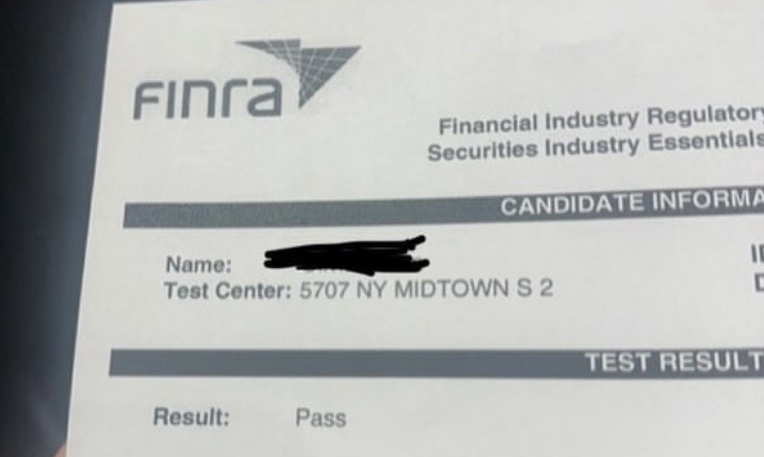
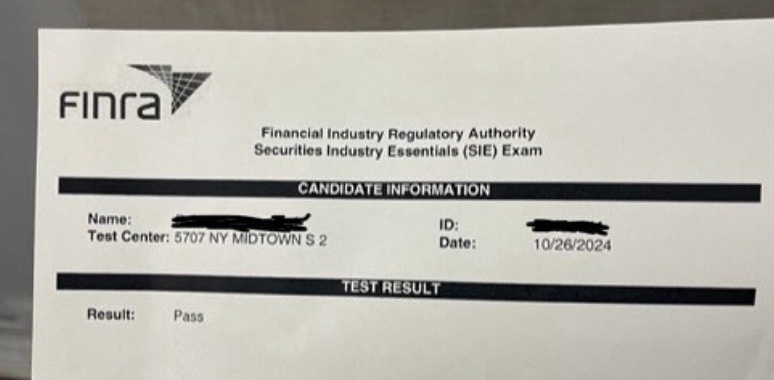
SIE passes from real candidates
Score reports shared by Exam Bootcamp students after passing the SIE.
Who SIE tutoring is for
The SIE is an entry-level exam, which is exactly why people underestimate it. Most candidates who book a session have already studied.
- You are retaking the SIE after failing, and the score report did not tell you much
- Your practice scores hover in the 60s and will not move
- You have no securities background and the product vocabulary is the problem
- Options and margin questions feel like a different exam from the rest of it
- You keep mixing up who regulates what — SEC, FINRA, MSRB, and the exchanges
- You have a start date at a firm and a hard deadline to pass by
- You finished a self-study course and still cannot tell which chapters are weak
- You can define the terms but the scenario questions still go wrong
What we cover in a SIE session
Four content areas: knowledge of capital markets, understanding products and their risks, trading and customer accounts, and the overarching regulatory framework.
Products and their risks
The largest area on the exam and the one that rewards structure. We work through equity, debt, packaged products, options, and municipal fund securities by what each one does for an investor and what can go wrong with it — because the exam asks about behavior and risk far more often than it asks for a definition.
Capital markets and market structure
Who issues, who underwrites, who trades, and where. The primary and secondary market distinction quietly decides a surprising number of questions, and candidates who learned the terms in isolation tend to lose those points without noticing why.
Trading, settlement, and customer accounts
Order types, settlement conventions, account registrations, and the information a firm must collect before it can recommend anything. This is where the SIE starts to look like the job rather than the textbook.
The regulatory framework
The SEC, the SROs, and the state regulators, and what each one actually has authority over. We build a clean mental map here, because a candidate who is guessing between FINRA and the SEC on a rule question is guessing on several questions.
Prohibited activities
Insider trading, market manipulation, churning, and the communications rules. Proportionally small in the outline and disproportionately costly on exam day, because the questions are fact patterns rather than definitions and the wrong answer usually looks reasonable.
Reading the question
Most SIE misses are not knowledge failures. The question gives you a customer, a product, and a constraint, and only one answer respects all three. We work through your missed questions live to find whether the gap is the material or the reading.
How we diagnose and teach
SIE candidates usually arrive able to recite what a mutual fund is and still miss the mutual fund question. The exam asks what the product does for this investor under these constraints, and study material teaches products in isolation. So we start with your missed questions, not with a chapter: what was the question actually asking, which two answers were written to be eliminated, and what in the setup ruled out the third.
From there it’s pattern recognition — teaching you to recognize the handful of question shapes the exam reuses — elimination discipline, and timing, so the method holds up at the end of the exam as well as it does at the start.
Who you’re working with
- 15+ years in the securities industry, including a career inside major banks
- Thousands of hours of one-on-one tutoring across FINRA and NASAA exams
- A track record of retake rescues — candidates who failed once or twice, often after a big-box course, and passed once the approach to reading exam questions changed
How a SIE session works
One hour, live, one-on-one — and you leave knowing what to do next.
Book your hour
Pick a time that works, pay, and your slot is locked in. Send your score report or practice scores ahead if you have them.
Diagnose the real gap
We work through questions you missed to separate topic gaps from reading and elimination mistakes.
Teach it, then apply it
Targeted instruction on the topic, followed immediately by exam-style questions on it.
Leave with next steps
A written plan for the days before your exam: what to drill, in what order, and what to stop spending time on.
PRICE AND BOOKING
1-Hour Private SIE Session
$220
- One hour, live and one-on-one
- Built around your practice scores and missed questions
- Products, market structure, regulation, and prohibited activities as needed
- Question-reading and elimination strategy
- A written next-steps plan before your exam date
Check available times
Browse upcoming 1-hour session slots. Booking + payment opens after you select a time.
Loading available times…
SIE tutoring FAQs
- A private session is $220 for one hour, one-on-one. There is no package requirement and no subscription.
Book a Private SIE Session
Bring your score report, your practice results, or just the questions you keep missing. We’ll find what’s costing you points and fix it.
More SIE resources
- SIE study guide and question bank — the material and exam-style practice to work through between sessions.
- Free SIE practice assessment — 50 exam-style questions with a topic breakdown, so you know what to bring to the session.
Study guides for the SIE and the exams around it
Tutoring works best with material to practice against between sessions. Start with the SIE study guide; the others are the exams most SIE candidates sit before or straight after it.
- SIE study guide — the self-paced material and exam-style question bank this tutoring builds on.
- Series 7 study guide — The most common top-off after the SIE — general securities representative.
- Series 6 study guide — The mutual fund and variable contracts top-off, if your firm sells those products.
- Series 79 study guide — The investment banking top-off for M&A and capital markets roles.
- Series 99 study guide — The operations professional qualification, for back- and middle-office roles.
Browse all securities exam study guides and live exam bootcamps.