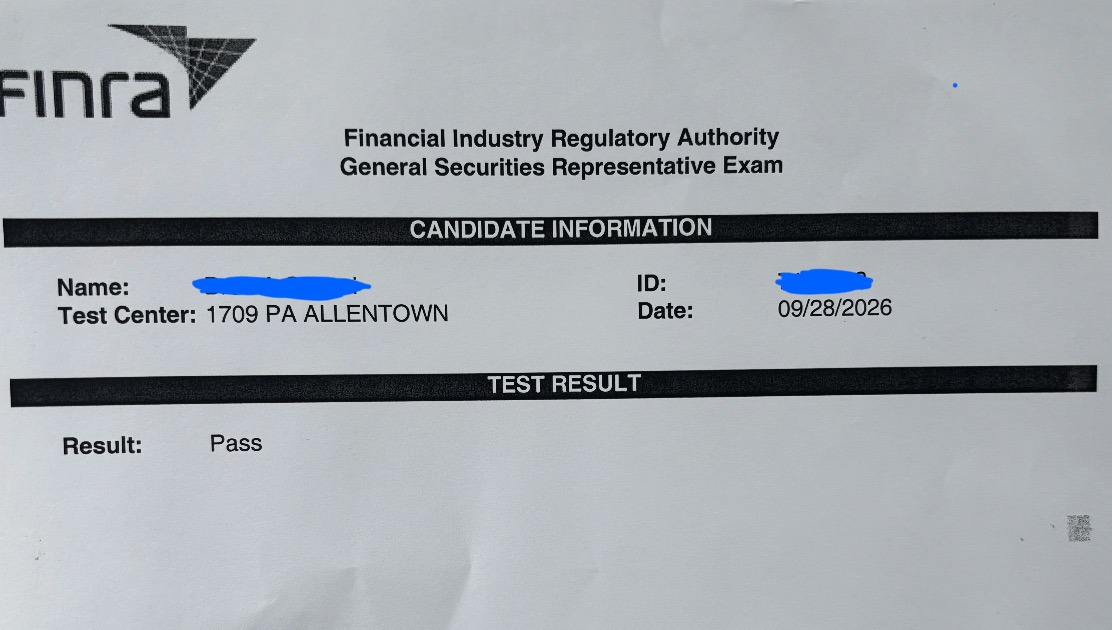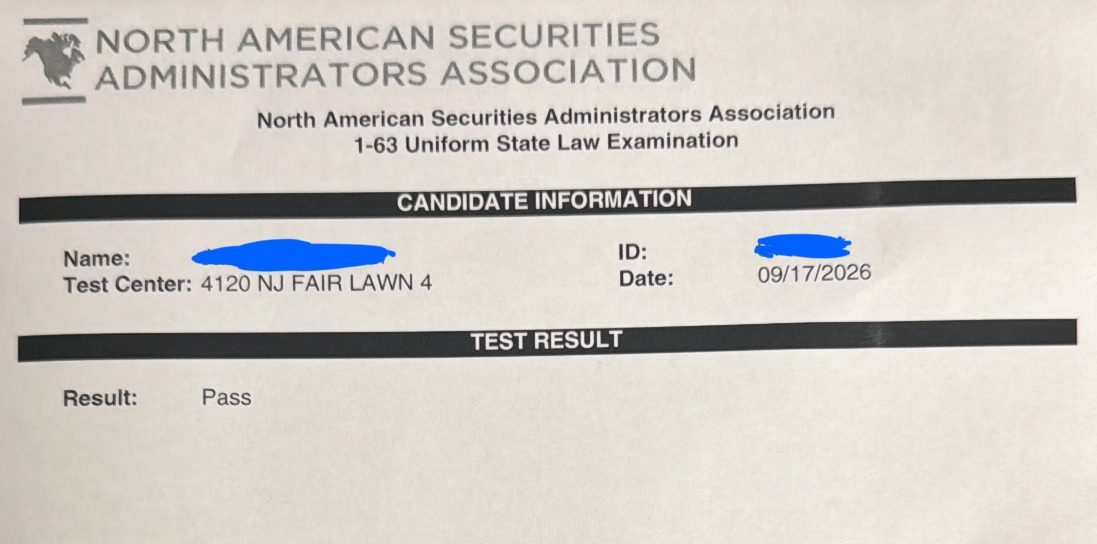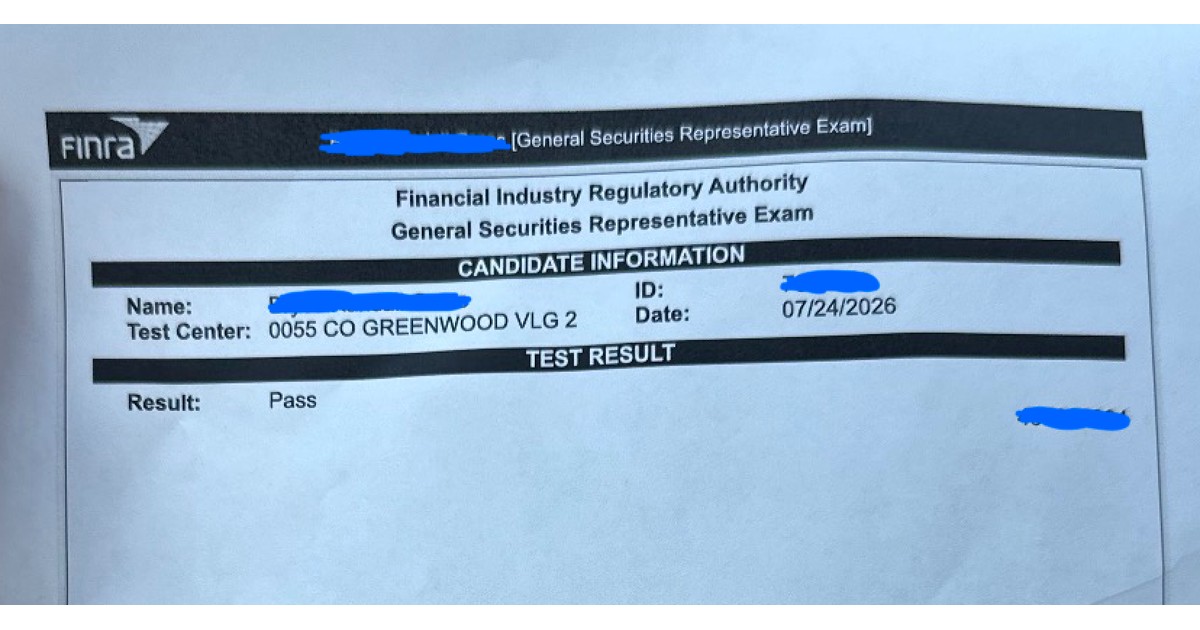
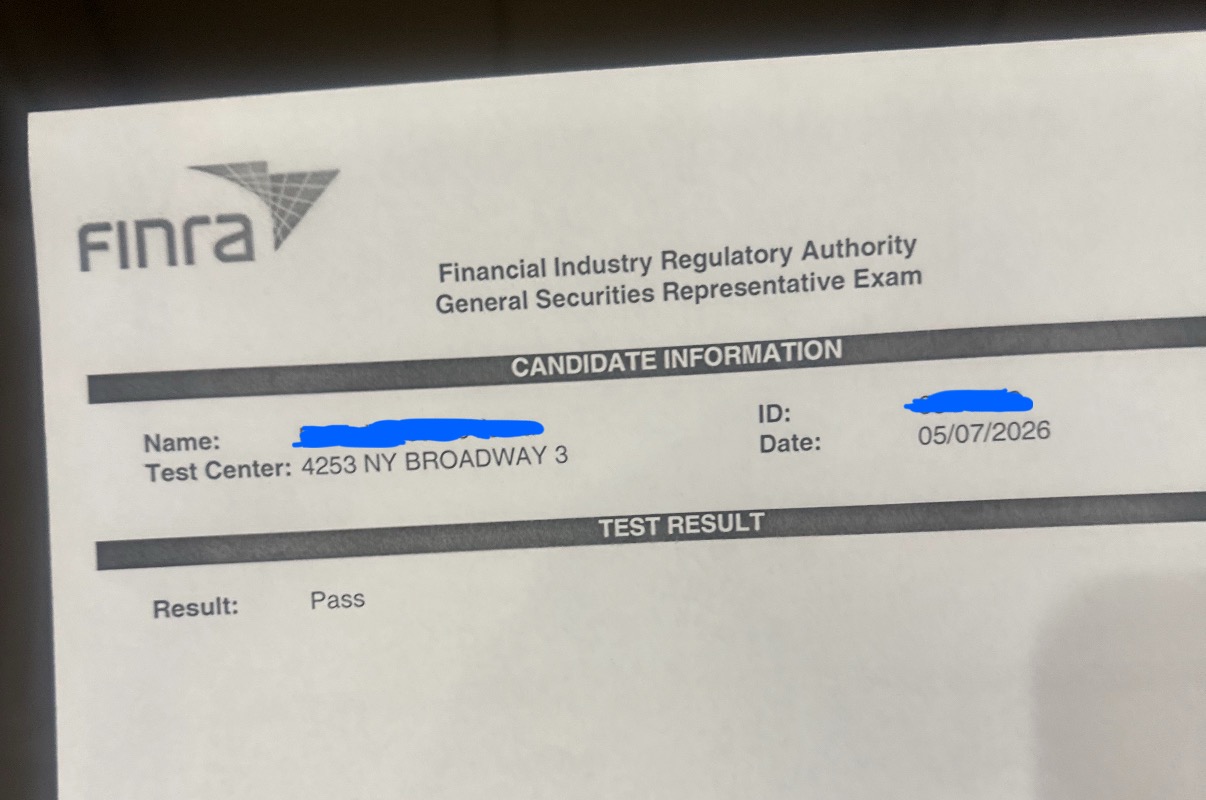
Another Exam Bootcamp student has officially passed the FINRA Series 7 exam, and this May 2026 result is exactly the kind of success story we work toward with every candidate.
This student used Exam Bootcamp’s private sessions and study material to prepare more efficiently, strengthen weak areas, and walk into the exam with a clearer plan. The result was simple: Pass.
For anyone searching for how to pass the Series 7 exam, this student success story is a reminder that preparation has to be focused. The Series 7 is not just about reading more pages or taking more random practice questions. It is about understanding what FINRA is testing, recognizing why questions are being missed, and fixing those issues before the real exam.
Another Series 7 Exam Pass From an Exam Bootcamp Student
Passing the Series 7 is a major step for anyone entering the securities industry. The exam is officially called the General Securities Representative Exam, and it is one of the most important licensing exams for candidates who want to work with a broad range of securities products.
According to FINRA, the Series 7 exam includes 125 multiple-choice questions, has a time limit of 3 hours and 45 minutes, requires a passing score of 72, and has the Securities Industry Essentials exam as a corequisite.
The Series 7 covers a wide range of material, including investment products, customer accounts, options, municipal securities, suitability, taxation, regulations, trading rules, and communications with the public. That is why students need more than surface-level memorization. They need a study plan that helps them apply the material to exam-style questions.
How This Student Prepared With Exam Bootcamp
This student did not rely on generic advice. The preparation was targeted.
Through Exam Bootcamp’s Series 7 private tutoring sessions, the student was able to focus on the areas that mattered most. Instead of reviewing every topic the same way, the sessions helped identify the weak spots, explain difficult concepts, and connect the material back to the way questions are actually tested.
The student also used Exam Bootcamp’s study material to organize the content and reinforce the most important Series 7 topics. That combination of structured review and one-on-one help made the preparation more focused.
The goal was not to memorize isolated facts. The goal was to understand the material well enough to answer exam-style questions under pressure.
Why Private Sessions Help Series 7 Candidates
Many students study for the Series 7 for weeks and still feel stuck. They may read the book, take practice questions, and watch videos, but their scores do not move enough. That usually happens because the student is repeating the same process without identifying the real source of the problem.
Private sessions help because they allow the preparation to become more personal. A student who struggles with options does not need the same plan as a student who struggles with municipal securities. A student missing suitability questions may need a different approach than someone who is losing points on taxation, margin, or customer accounts.
For Series 7 candidates, private tutoring often helps with:
- understanding options strategies instead of memorizing formulas
- breaking down suitability questions more clearly
- separating municipal bond rules from corporate bond concepts
- reviewing margin, taxation, and retirement account issues
- understanding customer account rules and required approvals
- learning how to read long exam questions without getting distracted
- building a final review plan before test day
That is why focused private sessions can be so effective. The student is not just watching another lecture. The student is working through the exact areas that need improvement.
What the Series 7 Exam Really Tests
The Series 7 exam is broad. Students are often surprised by how many different topics can appear in one exam. The test can move from options to municipal bonds, then to customer accounts, communications, mutual funds, variable annuities, taxation, margin, and suitability.
That is why a strong Series 7 study plan should be organized around the official exam structure. FINRA’s Series 7 outline divides the exam into the major job functions of a general securities representative. Candidates need to know the concepts, but they also need to understand how those concepts apply to customer situations.
At Exam Bootcamp, we spend a lot of time helping students connect product knowledge to recommendation logic. That is especially important because many Series 7 questions are not simple definition questions. They ask what is suitable, what is allowed, what must happen next, or what a registered representative should recognize in a specific scenario.
Students who improve usually stop asking only, “What does this term mean?” and start asking, “How would this be tested?” That shift matters.
Key Series 7 Topics We Often Cover in Private Tutoring
Every student is different, but many Series 7 candidates need help with the same high-value areas. These are some of the topics that often receive the most attention in our sessions.
1. Options
Options can be one of the most intimidating parts of the Series 7 exam. Students often try to memorize every possible outcome, but that approach can become overwhelming.
In private sessions, we focus on understanding calls, puts, spreads, straddles, breakevens, maximum gain, maximum loss, hedging, and income strategies in a more organized way.
The goal is to make options questions feel systematic instead of random.
2. Suitability and Recommendations
Suitability-style questions are a major part of Series 7 preparation. Students need to evaluate the customer’s age, income needs, risk tolerance, liquidity needs, time horizon, tax situation, and investment objective.
Strong candidates do not just ask, “What product is this?” They ask, “Does this product make sense for this client?”
That is one of the biggest differences between memorizing material and actually preparing for the exam.
3. Municipal Securities
Municipal securities are another area where students frequently lose points. We often review general obligation bonds, revenue bonds, tax treatment, official statements, underwriting, customer confirmations, MSRB rules, and suitability considerations for municipal investors.
Municipal questions can be very rule-based, so structure matters. Students need to know the definitions, but they also need to understand how those rules show up in customer scenarios.
4. Debt Securities
Bond questions can test yield, price movement, interest-rate risk, call risk, reinvestment risk, credit risk, and the differences between corporate, municipal, agency, and government securities.
Students need to understand how bond prices respond when interest rates move and how different bond features affect risk and suitability.
5. Investment Companies and Variable Products
Mutual funds, ETFs, closed-end funds, unit investment trusts, variable annuities, and variable life products appear throughout Series 7 prep.
Candidates should understand sales charges, breakpoints, rights of accumulation, letters of intent, redemption, taxation, subaccounts, annuitization, and how these products fit different customer profiles.
6. Customer Accounts and New Account Rules
Series 7 students also need to know account types, required documentation, discretionary authority, trading authorization, margin agreements, options agreements, custodial accounts, retirement accounts, and account approvals.
This content matters because many questions test what a registered representative or firm must do before a transaction can occur.
7. Orders, Trading, and Market Mechanics
Students should understand market orders, limit orders, stop orders, stop-limit orders, short sales, trade settlement, confirmations, dividends, ex-dividend dates, and basic market structure.
This section rewards candidates who can slow down and identify exactly what the order or transaction is designed to do.
Why Study Materials Still Matter
Private tutoring works best when the student also has the right study material. Sessions can clarify difficult topics, but students still need a structure for review, repetition, and practice.
That is why this student’s preparation combined private sessions with Exam Bootcamp study material. The study material helped organize the content, and the sessions helped turn confusing areas into topics the student could explain and apply.
A good study plan should make the exam feel less scattered. Instead of jumping randomly from topic to topic, students should know what they are reviewing, why it matters, and how it is likely to appear on the exam.
How to Pass the Series 7 Exam
If you want to pass the Series 7 exam, do not study passively. Reading alone is rarely enough. You need to review the official outline, learn the major concepts, take practice questions, study your mistakes, and spend extra time on the topics that keep costing you points.
A strong Series 7 plan should include:
- a clear understanding of the official FINRA Series 7 content outline
- daily review of high-frequency topics
- targeted practice questions instead of random guessing
- careful review of every missed question
- extra time on options, suitability, bonds, munis, and customer accounts
- timed exams to build endurance
- a final review plan for the last week before the exam
Most students do not fail because they are incapable. They struggle because their study time is not focused enough. Once preparation becomes more targeted, improvement usually becomes much easier to see.
Need Help With the Series 7?
Exam Bootcamp helps students prepare for the SIE, Series 7, Series 63, Series 65, Series 66, and other securities licensing exams. We work with students who are just starting, students who are retaking an exam, and students who need focused help before test day.
If you want one-on-one help, visit our Series 7 private tutoring sessions page.
If you want structured study material, review our Series 7 Study Guide.
If you want more exam strategy, read our guide on Series 7 exam format and topics.
Related Student Success Stories
This student is one of many Exam Bootcamp candidates who used a focused plan to prepare for a securities licensing exam.
You can also read our Series 7 exam turnaround story about a student who went from a 71 to a pass, or our SIE exam student success story for another example of focused exam preparation.
Final Thoughts
This May 2026 Series 7 pass is another reminder that focused preparation works. The student used Exam Bootcamp private sessions and study materials, worked through difficult topics, and earned a passing result.
If you are preparing for the Series 7 right now, do not wait until the final week to get organized. Use the official FINRA resources, review the topics that matter most, and get help where you need it.
Exam Bootcamp is here to help you prepare with a clearer plan, better structure, and focused support.
Frequently Asked Questions About Passing the Series 7
How many questions are on the Series 7 exam?
The Series 7 exam has 125 multiple-choice questions, according to the FINRA Series 7 exam page.
What score do you need to pass the Series 7?
FINRA lists the Series 7 passing score as 72.
How long is the Series 7 exam?
The Series 7 exam time limit is 3 hours and 45 minutes.
Can private tutoring help with the Series 7?
Private tutoring can help Series 7 candidates focus on weak areas, understand difficult topics, and build a more organized final review plan.
Where can I get Series 7 help?
You can schedule one-on-one help through Exam Bootcamp’s Series 7 private tutoring sessions or review the Series 7 Study Guide.
Ready to book? Start with private Series 7 tutoring.